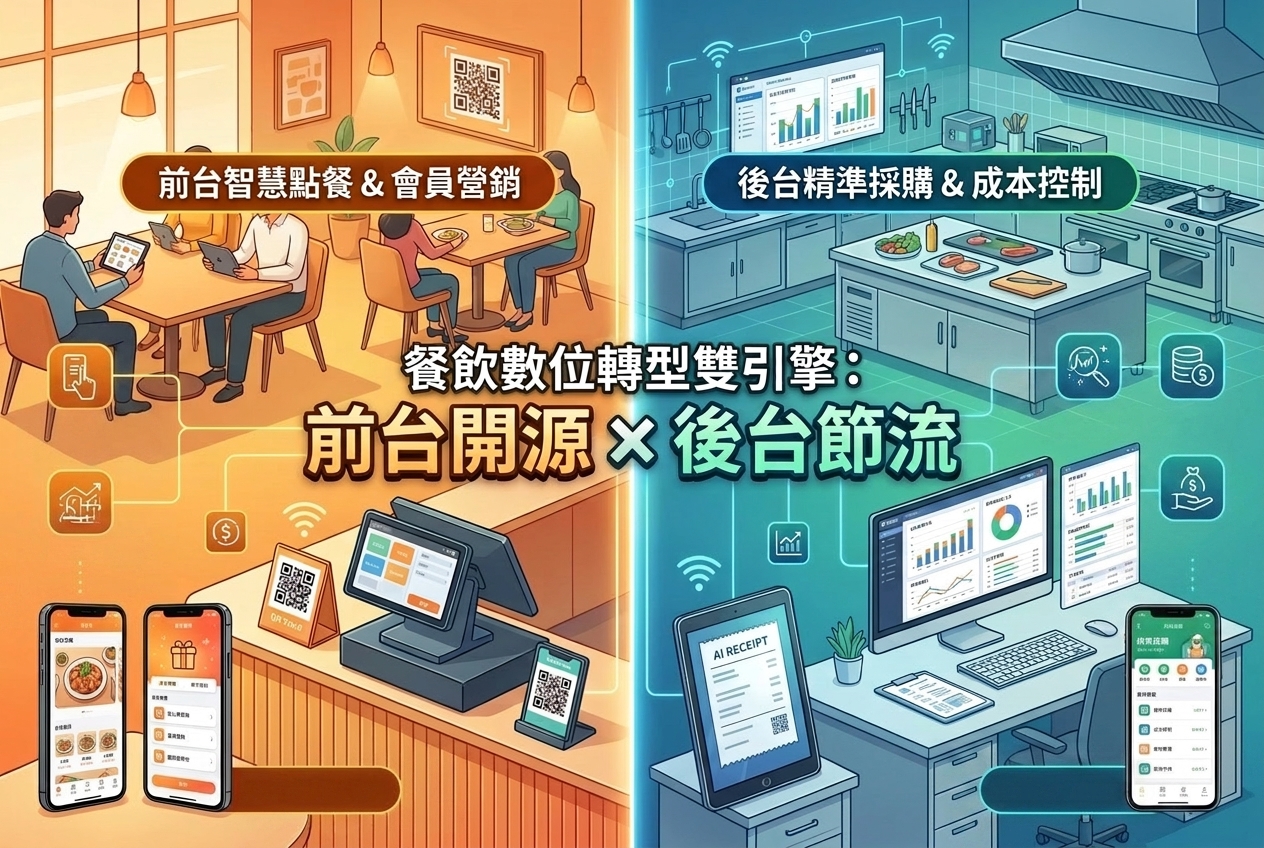
When your franchise grows from 3 to 10 locations, the first thing that usually breaks isn’t sales—it’s management. One store is ordering via WhatsApp, another is tracking stock on Excel sheets, the central kitchen is running its own spreadsheets, and accounting is chasing missing invoices at the end of the month. You think you’re expanding, but you’re actually just multiplying the chaos.
This is why a franchise restaurant management system is essential. It’s not just a platform to "look at numbers." It’s about turning purchasing, inventory, costs, invoices, approvals, and margins into a single, workable routine.
What Problems Should a Franchise System Actually Solve?
The biggest challenge in franchising isn’t that headquarters lacks data. It’s that every location operates differently, making it impossible to compare them. Store A has higher buying prices, Store B reports constant waste, and the manager at Store C has a habit of verbal ordering. By the end of the month, management is left staring at the books without a clue where their margins went.
If your system stops at POS sales data, you only see what went out, not what came in, how much was used, or how much was wasted. For franchise brands, the real value comes from bridging frontline execution with back-office finance. That way, you’ll know if a store is struggling with low sales, messy ordering, or poor inventory discipline.
A decent franchise management system doesn’t need to be bloated with features. It just needs to standardize the most tedious, error-prone tasks: invoice entry, supplier reconciliation, mobile ordering, stocktakes, waste tracking, recipe costing, central purchasing, and multi-level approvals. Without these, your reports are just history lessons.
How a Proper Franchise Management System Operates
1. Start with Invoices, Not Just Dashboards
Many brands ask for dashboards first. But the foundation of franchise operations is clean data. If your purchase orders, delivery notes, and hand-written invoices still rely on manual data entry, a single typo or a missing receipt will ruin your entire cost analysis.
A more practical approach is letting staff snap photos of invoices on their phones. The system uses OCR to capture invoice data automatically, matches it against suppliers and items, and turns it into clean, usable data. The benefit is immediate: managers spend less time on admin, accountants stop chasing missing invoices, and headquarters spots cost spikes early.
2. Standardize Purchasing (No More Relying on Memory)
One of the biggest issues for franchises is having multiple ordering methods under one brand. If some stores call suppliers, others text, and some use paper forms, your records will be scattered. Comparing supplier performance or checking if a store is buying from approved vendors becomes an uphill battle.
Your system should support ordering via mobile apps, WhatsApp, or email while keeping a complete paper trail. More importantly, it should enforce approval rules—like flagging over-budget orders or ensuring specific items are only bought from approved suppliers. These details might seem administrative, but they directly protect your margins.
3. Real Inventory Control is More Than Just Stocktakes
Many operators think that having a digital count sheet means they have inventory control. It doesn’t. For franchises, the real task is managing the flow of stock—receiving, transfers, usage, waste, and central kitchen dispatches. Otherwise, you only know what is left, not why it went missing.
A useful system allows the team to log stocktakes, waste, and internal transfers on their phones. This data goes straight to headquarters, allowing management to compare actual usage across locations, spot unusual patterns, and figure out if a margin drop is due to price hikes or kitchen habits.
Key Features to Look For in a Franchise Management System
Real-Time Costs Over Month-End Reports
Franchise decisions can’t wait for month-end accounting. If a supplier raised prices this week and your system doesn’t show it until next month’s report, it’s too late. A good system monitors price fluctuations in real-time. When key ingredient prices rise, management should see the impact on menu margins immediately.
It’s not just about getting an alert; it’s about being able to trace the root cause. Is a supplier raising prices for everyone, or did one store just buy the wrong item? Is it a temporary spike or a trend? If a system only shows results without context, its value is limited.
Connecting Recipe Costs to Menu Margins
Franchise headquarters usually have standard recipes, but portion control at the stores can vary. The result? A dish that looks highly profitable on paper ends up with disappointing actual margins. Your system should link recipe specs, purchase prices, and POS sales to compare theoretical versus actual food costs.
If a signature dish sells well but its profitability drops, you shouldn’t have to guess why. The data will tell you if it’s due to supplier price hikes, over-portioning, or waste. This kind of analysis is vital for franchise systems, as it directly informs staff training, menu pricing, and product consistency.
Integrating POS with Accounting
If your system only tracks purchasing and inventory but doesn’t connect to your POS or accounting software, you’re stuck manually moving data between platforms. This is time-consuming and opens the door to human error.
Ideally, when a sale happens on the POS, the system automatically subtracts the theoretical stock. Once invoices are verified, payables flow directly to your accounting software (like QuickBooks or Xero). This integration gives management a clearer picture of daily estimated profits rather than just historical data.
Look Beyond the Feature List
It’s easy to get distracted by a long checklist of features. But real-world success usually comes down to three things:
First, will your frontline staff actually use it? If counting stock is too tedious or capturing invoices requires a desktop computer, they will quickly revert to old habits. The system must fit naturally into their workflow.
Second, is the data auditable? Trust is great, but accountability is better. Every price change, stock transfer, or emergency purchase should leave a clear trail. This protects both the store managers and the brand as you scale.
Third, does it scale with you? A brand with 3 stores has different needs than one with 30. You might start with basic invoice capture and inventory, but eventually, you will need central kitchen management, cross-store transfers, and API integrations. Pick a system that fits your current operational realities but leaves room for growth.
Why Franchise Brands Need Data Discipline
Single-location owners can manage by being on the floor every day. For franchises, that’s impossible. When you are replicating a brand rather than just a few skilled staff, the system’s job is to turn experience into standards, standards into records, and records into comparable data.
This is why growing brands move away from Excel to unified platforms. Tools like Costflows focus on consolidating AI invoice extraction, ordering, inventory, and recipe costing into one platform. The real value is not about "fancy tech"—it’s about turning time-consuming admin tasks into easy, daily routines.
If you are planning to expand your franchise, the question isn’t whether you need a system, but rather: "Which operational messes do I want to stop duplicating?" Finding the answer is how you turn software into a tool that actively protects your hard-earned margins.
.png)

訂閱最新消息
不要錯過任何餐飲的資訊