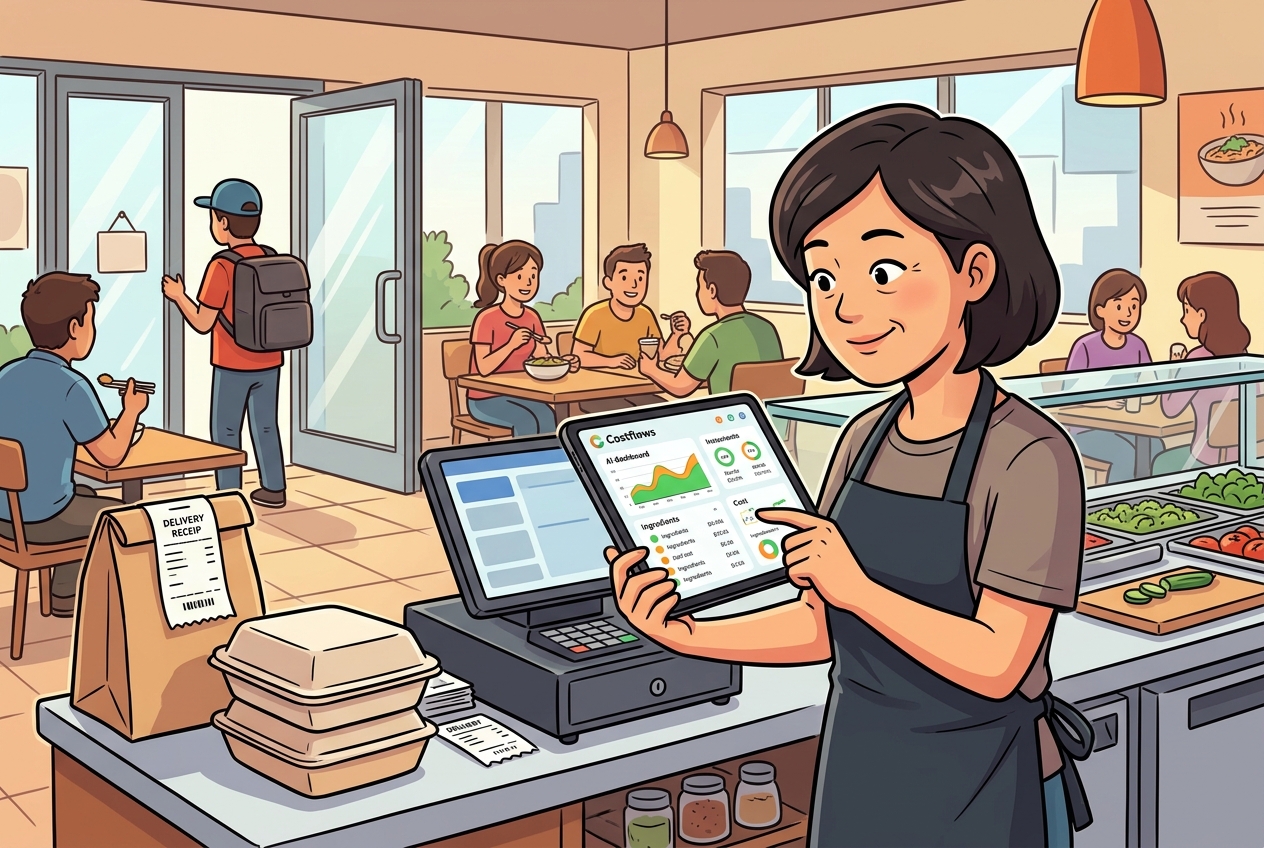
A slight price bump on beef, an unrecorded waste ticket, or an extra half-scoop of sauce in the kitchen—on their own, these seem tiny. But add them up over a month? That is usually why your gross margin lands a few percentage points below target. The real kicker: most restaurants only realize costs got out of hand at the end of the month when accounting closes the books. By then, it’s too late to tweak purchasing, adjust menu prices, or fix kitchen portioning.
A true restaurant margin analysis tool isn't just about printing another pretty report. It's about connecting purchasing, inventory, sales, waste, and recipe costs into a single, traceable data loop. Management gets daily visibility into margin shifts, buyers catch supplier price hikes instantly, chefs know exactly which dishes need re-costing, and front-line staff have clear guidelines for stock counts and waste tracking.
Margin Drops Are Rarely Just One Department’s Fault
Calculating gross margin sounds simple enough: sales minus cost of goods sold (COGS), divided by sales. But managing it in the real world? That’s where things get tricky. COGS isn't just a single supplier invoice. It involves purchase prices, receiving quantities, unit conversions, inventory fluctuations, central kitchen transfers, waste, staff meals, recipe testing, and the exact amount of ingredients used in every single plate.
When this data is scattered across paper invoices, WhatsApp messages, Excel sheets, POS systems, and accounting software, any delay or missed entry distorts your margins. For instance, purchasing might know produce prices went up, but your recipe costing is still running on old numbers. Or your POS shows a top-selling dish, so inventory should be down, but actual stock counts don't match up. These gaps don't necessarily mean someone made a mistake, but they definitely need investigating.
A truly useful tool turns margin analysis from "explaining past results at month-end" into "managing operations every single day." Operators shouldn't just ask, "What was our margin this month?" They should ask: Which ingredient category surged the most today? Which location has abnormal waste? Which dish's actual cost crossed our target threshold?
4 Critical Data Points Every Effective Restaurant Margin Analysis Tool Must Track
1. Real-Time Purchasing Price Updates
Ingredient costs are never static. Seafood, meat, produce, cooking oils, and seasonings constantly fluctuate due to seasons, supply chain pinches, or supplier price hikes. If invoices are still typed in manually, price changes usually go unnoticed until month-end—or worse, they get buried because packaging units differ across vendors.
Your system should automatically pull line items, unit prices, quantities, and vendor info straight from invoices, standardize the units, and compare them against historical purchase prices. When a price spikes outside normal ranges, management gets an instant alert instead of digging through paper receipts weeks later. This lets your team immediately verify if it's a temporary market rate, an entry error, or a prompt to renegotiate with the supplier.
2. Recipe Costs That Reflect Kitchen Reality
Plenty of restaurants have standard recipes, but very few update recipe costs regularly. When chicken, cream, or cheese prices climb, your menu's theoretical cost falls behind reality. Even worse: a recipe calls for 150 grams, but during a rush, kitchen staff dish out 180 grams. A single dish variance looks harmless, but over time, it eats away at your margins.
Accurate recipe costing breaks down every ingredient, sauce, prepped component, and garnish using the latest purchase prices. Laying out every dish's selling price, cost amount, and margin percentage on one dashboard lets you spot your high-margin stars versus high-volume dishes that yield paper-thin profits.
That said, a low margin doesn't mean a dish should be axed immediately. Some signature items drive foot traffic, while low-margin sides boost overall check sizes. Data gives you facts, but decisions still require context—like brand positioning, sales volume, and customer feedback. Solutions might involve tweaking portions, swapping ingredients, re-pricing, or pairing items, rather than relying solely on a margin cutoff.
3. Theoretical vs. Actual Usage Alignment
Theoretical cost equals POS sales volume multiplied by recipe specs. Actual cost comes from purchases, starting/ending inventory, transfers, and logged waste. The gap between the two is where profit leaks happen.
If selling 100 meals theoretically requires 20kg of beef, but actual stock usage shows 25kg, where did that 5kg go? Over-portioning, stock count errors, unrecorded waste, receiving shortages, or theft? Without actual vs. theoretical cost comparisons, managers are just guessing. A variance report broken down by store, category, date, and ingredient gives you actionable insights to fix the root cause.
Of course, this requires operational discipline. Inventory frequency, measurement units, waste logging, and transfer tracking must be consistent. Software automates calculations and reduces human error, but it can't replace kitchen execution. For high-value, perishable, or volatile items like seafood, liquor, beef, and oil, start with frequent counts and strict approval rules before scaling across all inventory.
4. Daily P&L to Drive Same-Day Decisions
Traditional monthly P&L statements are great for tax filings, but useless for daily operational fixes. Restaurant managers need daily estimated P&L: Did we hit today's sales target? Is food cost percentage running high? Which category had unexpected spend? Did that promo campaign actually make us money?
When POS sales, invoices, inventory movements, and recipes talk to each other, daily margin tracking becomes effortless. While daily figures aren't a 100% replacement for formal accounting month-end closes, they provide a powerful early warning system. This speed is crucial for multi-unit operators, franchises, and central kitchens—headquarters no longer has to wait weeks for spreadsheets to spot operational red flags.
Turning Margin Management into an Everyday Routine
To make data work, step one isn't giving staff more spreadsheets to fill out—it's eliminating double entry. At receiving, staff simply snap a photo of the invoice with a phone and let AI capture data automatically. Purchase requests, vendor orders, and multi-tier approvals happen in one smooth workflow, while front-of-house records counts, transfers, and waste on mobile devices. Once data enters the system daily, real-time cost calculation becomes a reality.
Step two is setting up unified item naming. The same tomato shouldn't be called "Tomato," "Fresh Tomato," and "Roma Tomato" across different invoices. Kilograms, cases, boxes, and pounds must be clearly converted. It sounds like back-office housekeeping, but it directly impacts whether supplier price comparisons, recipe costs, and inventory reports are trustworthy.
Step three is defining clear roles. Purchasing monitors price spikes and vendor performance; head chefs track recipe costs and variance; store managers handle daily inventory, waste, and margin alerts; finance reviews invoices, AP, and P&L trends. When everyone gets actionable insights relevant to their role, reports actually get used.
Look Beyond the Number of Reports When Choosing Software
A common mistake operators make is thinking that having inventory or cost reports equals good margin management. What really matters is how seamlessly data flows from daily operations into the software, and whether every number can be audited back to its source. If staff still have to write numbers on paper, re-type them into Excel, and manually upload them, administrative work hasn't vanished—it's just been shifted around.
When evaluating restaurant software, check if it supports handwritten or unstructured invoices, multi-language processing, mobile usability for kitchen teams, seamless integration with your POS and accounting systems (like QuickBooks or Xero), and multi-unit/franchise permission controls. Single stores prioritize fast setup and reduced data entry; multi-unit brands need cross-store standards, audit trails, and deep integrations.
Platforms like Costflows use AI invoice capture and human verification to turn unstructured invoices into structured data. By linking purchasing, inventory, recipes, POS, and daily P&L, Costflows automates tedious data entry and reconciliation so your team can focus on making smart, profitable decisions.
Gross margin isn't something to worry about only at the end of the month. When every invoice, count, waste log, and recipe cost is captured daily, you plug profit leaks before they happen—making cost control a natural part of your daily operations.
Q&A Section
Q1: Why do restaurants need daily margin analysis instead of waiting for monthly financial statements?
A1: Ingredient prices fluctuate rapidly and kitchen waste happens daily. Waiting for month-end reports means reacting after profits are already lost. A daily restaurant margin tool integrates POS and invoice data in real time, alerting managers to cost spikes instantly so they can adjust menu pricing or sourcing strategy immediately.
Q2: How does a restaurant margin analysis tool handle variances between theoretical and actual food costs?
A2: The system calculates theoretical usage by multiplying POS sales by standard recipe specs, then compares it against actual usage derived from invoices, stock counts, and waste logs. This variance highlights hidden costs like kitchen over-portioning, unrecorded waste, receiving errors, or inventory shrinkage.
Q3: Will adopting an AI-powered cost management system like Costflows burden front-line restaurant staff?
A3: No, it actually cuts down manual admin work. Costflows allows staff to snap photos of invoices using a mobile phone, using AI to extract line items and prices automatically. It syncs directly with accounting software like QuickBooks and Xero, eliminating manual Excel entries and tedious paper checks.
.png)

訂閱最新消息
不要錯過任何餐飲的資訊