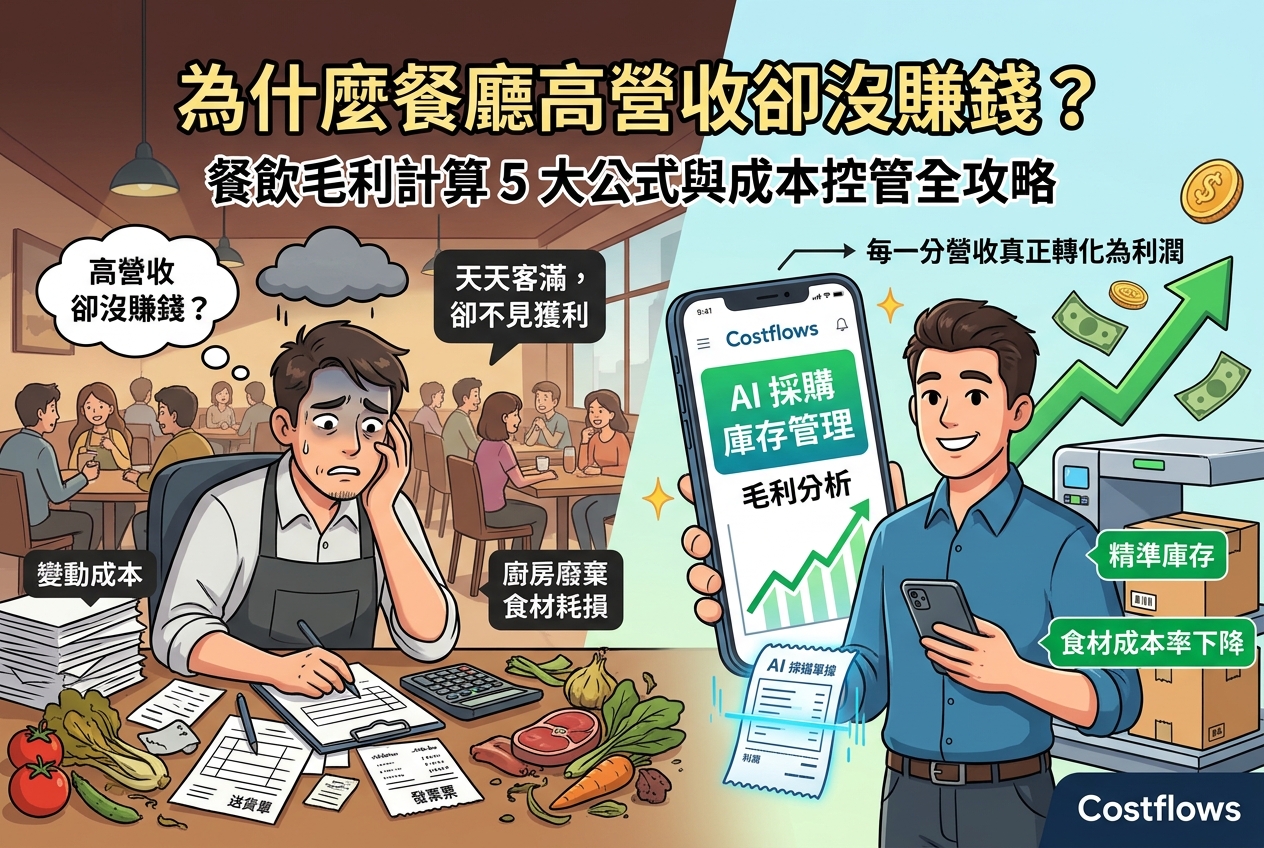
In the fiercely competitive F&B industry, many restaurant owners face the same frustrating mystery: "Our dining room is packed every night and sales are hitting record highs—so why is there barely any profit left at the end of the month?"
More often than not, the answer is hiding in your walk-in freezer, your dry storage, and that messy stack of supplier invoices sitting on your desk.
Industry benchmarks show that food cost typically accounts for 25% to 35% of a restaurant’s total revenue. With inflation driving ingredient prices up unpredictably, relying on clipboards, complicated Excel spreadsheets, or a chef’s "gut feeling" to order stock is a recipe for disaster. Spoilage, over-ordering, human data-entry errors, and unrecorded kitchen waste will quietly eat away your net profit.
This is exactly why modern F&B operators are ditching spreadsheets and switching to dedicated restaurant inventory management systems. Let’s break down why upgrading your inventory process is no longer optional—and how AI technology makes controlling your food costs practically effortless.
1. The 4 Hidden Traps of Traditional Inventory Management
Before looking at how software helps, let’s be honest about what traditional methods (pen, paper, Excel, and messaging apps) are actually costing your business:
- Soul-Crushing Manual Data Entry: Every day, your team receives stacks of paper delivery notes and invoices. Someone—usually a manager or bookkeeper—has to spend hours typing item names, quantities, and unit prices into a computer. Not only is this a massive waste of labor, but a single misplaced decimal point can throw off your entire accounting.
- Blind Spots to Ingredient Price Fluctuations: The prices of meat, seafood, and fresh produce change constantly. Spreadsheets are static; they don't update your dish margins in real time. By the time your accountant closes the books at the end of the month, you might realize your bestselling signature dish has actually been losing money for weeks due to a sudden supplier price hike.
- Chaotic Ordering via WhatsApp or LINE: Placing orders with dozens of vendors through group chats is a nightmare to track. It leads to missed orders, duplicate deliveries, wrong specifications, and zero visibility for management over who approved what purchase.
- The Gap Between "Theoretical" and "Actual" Usage: Without connecting your inventory to your POS sales data, you only know what you used—not what you should have used. You have no way of spotting over-portioning, prep waste, or even internal theft.
2. Why Use a Restaurant Inventory Management System? 5 Game-Changing Benefits
Adopting a purpose-built F&B inventory and procurement platform like Costflows isn't about giving your kitchen staff more digital chores. It’s about automating the boring stuff so you can build a leak-proof financial system. Here is how it transforms your operations:
1. AI Invoice Scanning Cuts 80% of Admin Time
The #1 reason traditional inventory software fails in restaurants is simple: chefs hate typing on computers. Modern platforms like Costflows solve this with AI-powered OCR (Optical Character Recognition). When a delivery arrives, your staff simply snaps a photo of the supplier's paper invoice using the mobile app. Within seconds, the AI extracts the line items, quantities, and latest unit prices—automatically updating your stock levels and logging the expense.
2. Dynamic Recipe Costing (BOM) to Protect Your Margins
Restaurants don't just buy and sell whole boxes; you buy ingredients in bulk and sell them by the gram or milliliter. By building your Bill of Materials (BOM) / standardized recipes in the system and linking it to your POS, the software automatically converts purchasing units into recipe units and deducts ingredients every time a dish is sold. Better yet, whenever an invoice scan detects a price change from a supplier, Costflows dynamically recalculates your recipe costs and gross margins in real time. You’ll know immediately when to tweak a menu price or swap an ingredient.
3. Catch Hidden Waste with Theoretical vs. Actual Variance Reports
By comparing your POS sales data (theoretical usage) against your staff's physical stocktakes (actual usage), the system highlights exact discrepancies. If your variance report shows you’re missing 15% of your premium ribeye steak or high-end spirits, you can step in immediately. Is the kitchen forgetting FIFO (First-In, First-Out) rules and letting food spoil? Are chefs eyeballing portions instead of using scales? Data gives you the answers.
4. Smart Purchasing & Par Level Alerts
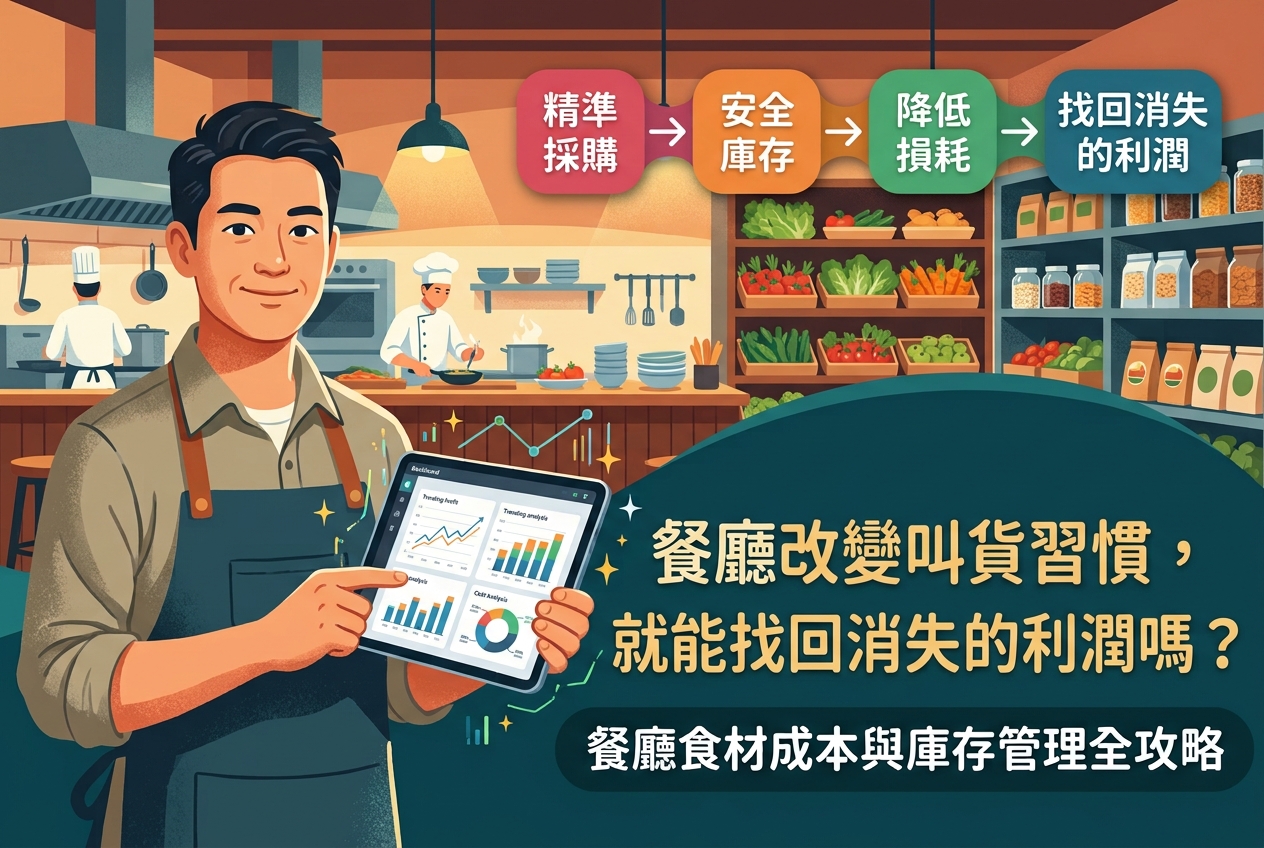
Stop guessing how much to order. A good inventory system lets you set Par Levels (minimum safety stock) for every ingredient. When stock runs low, the system alerts your team, allowing them to generate purchase orders for suppliers or your central kitchen with a single tap on their phones. Plus, with built-in approval workflows, owners can set spending limits so big orders require manager sign-off before they go out.
5. Seamless POS and Accounting Integration (Like Xero)
Month-end reconciliation shouldn't be a headache. Costflows bridges the gap between your front-of-house and your back office. It pulls daily sales data directly from your POS system and pushes categorized, digitized supplier invoices straight into cloud accounting software like Xero. Bookkeeping takes minutes instead of days, giving you a real-time view of your P&L anytime, anywhere.
3. Bottom Line: Turn Your Kitchen Data into a Profit Engine
When margins are tight, there are only two ways to make more money in the restaurant business: increase sales or cut costs. While marketing campaigns to attract new diners can be expensive and unpredictable, tightening up the 30% of revenue you spend on food costs is the fastest, highest-ROI move you can make.
Ready to ditch the messy spreadsheets and stacks of paper invoices? Costflows provides an all-in-one, AI-driven procurement, inventory, and food cost management platform built specifically for single-unit restaurants, multi-location chains, and central kitchens.
Book a free demo with Costflows today and start turning every dollar saved in the kitchen into pure profit!
💡 Frequently Asked Questions (FAQ)


訂閱最新消息
不要錯過任何餐飲的資訊