Waiting until the end of the month to find out if your restaurant made or lost money is usually too late. When ingredient prices fluctuate daily, frontline staff are constantly ordering stock, kitchens are dealing with waste, and the floor is running promotions, relying on Excel to piece together the numbers means your margins are already gone by the time you see the report. The value of a daily estimated P&L is that it connects sales, purchasing, inventory, and operational expenses immediately. You don't have to wait for your accountant to close the month to know exactly where you stand.
In the restaurant industry, profit and loss is never just a finance department problem. Roster scheduling, procurement orders, menu updates, and kitchen stocktakes all directly impact daily profits. That's why a useful P&L report shouldn't be a static, mid-month document that you look at when it's already too late to make changes. It should be a dynamic management tool used to adjust your daily operational pace.
A Daily Estimated P&L is Not Just a Mini Financial Report
Many operators hear "daily P&L" and their immediate reaction is that it can't be 100% accurate. That's a fair concern because an estimate is never going to perfectly match your final audited financial statement. But the goal isn't to make them identical; it’s to get data fast enough so you can see where your business is heading and make adjustments.
The core purpose of a daily estimated P&L is to use today's known data to make management decisions. This typically includes POS sales, entered purchase invoices, known fixed expenses, estimated inventory usage, kitchen waste, and apportioned labor or utility costs. The focus isn't tax filing—it's spotting anomalies on the fly. For example, why did Sales go up at Outlet A, but gross margins went down? Or why did the purchasing price of chicken go up, but our menu price remained unchanged?
If you look at these trends daily, minor issues won't balloon into massive month-end losses. On the flip side, if you only look at monthly reports, your decisions will always be a step too late.
Why Restaurants Specifically Need a Daily Estimated P&L
The F&B industry moves fast, and operational mistakes compound quickly. A supplier raising prices once or twice, a buyer over-ordering, a chef over-portioning, or a stocktake missing some waste logs might seem minor individually, but they can easily tank your overall margin within a single week.
A daily estimated P&L serves as a unified management language. It translates scattered data across different departments into a simple metric. Instead of just seeing "how much we sold today," management sees "how much profit is left after those sales." This difference determines whether you immediately adjust order volumes, pause low-margin items, audit prep waste, or reallocate labor.
This is especially true for multi-unit brands. How does one location maintain steady margins while another with similar sales swings wildly? Without daily data, your answers will always be based on gut feel. With a daily report, you can easily tell whether the issue lies in supplier pricing, recipe execution, stocktake discipline, or portion control.
What a Useful Daily Estimated P&L Actually Includes
First and foremost is revenue. POS sales data needs to be real-time and breakable by store, hour, and category. Otherwise, you only see total sales without understanding the product mix.
Next is food cost. This is the hardest part because you can't simply treat today's purchases as today's actual cost. The right way to do it is to link purchasing, inventory, recipe specs, and sales data to calculate theoretical usage, then cross-reference that with physical deliveries and stocktake results. This tells you if cost increases are due to high sales volume, supplier price hikes, or kitchen waste.
Third is operational expenses, including labor, utilities, third-party delivery commissions, rent, and consumables. While these can't always be tracked down to the exact penny daily, you need a consistent logic to distribute these costs. You don't need to reconcile every single dollar on the day, but you must ensure your trends are comparable.
Finally, anomaly flags. A great report doesn't just show numbers; it highlights items that drift outside normal bounds. This could be an ingredient unit price spikes, a recipe margin dipping below a safe threshold, or waste at a specific location exceeding standards for three consecutive days. Data on its own doesn't manage a restaurant; actionable alerts do.
The Biggest Hurdle Isn't the Report Itself
The real bottleneck usually lies in raw data collection. Missing paper invoices, unstructured WhatsApp orders, hand-written stocktakes, unrecorded waste, and mismatched supplier item names mean that no matter how complex your spreadsheets are, you're just automating chaos.
This is why many restaurants try running daily P&Ls and eventually give up. It’s not because the concept is flawed, but because frontline workflows aren't standardized. If purchasing, receiving, data entry, stocktakes, and waste tracking all require manual post-mortem cleanups, your reports will always be late, incomplete, and inaccurate.
To run a successful daily estimated P&L, you must fix your data sources first. Ask yourself: Can delivery notes be instantly photographed and uploaded? Can information be automatically captured and structured? Are supplier item names standardized? Do POS sales and inventory sync? This foundation is what makes your reporting valuable.
How to Successfully Operationalize a Daily P&L
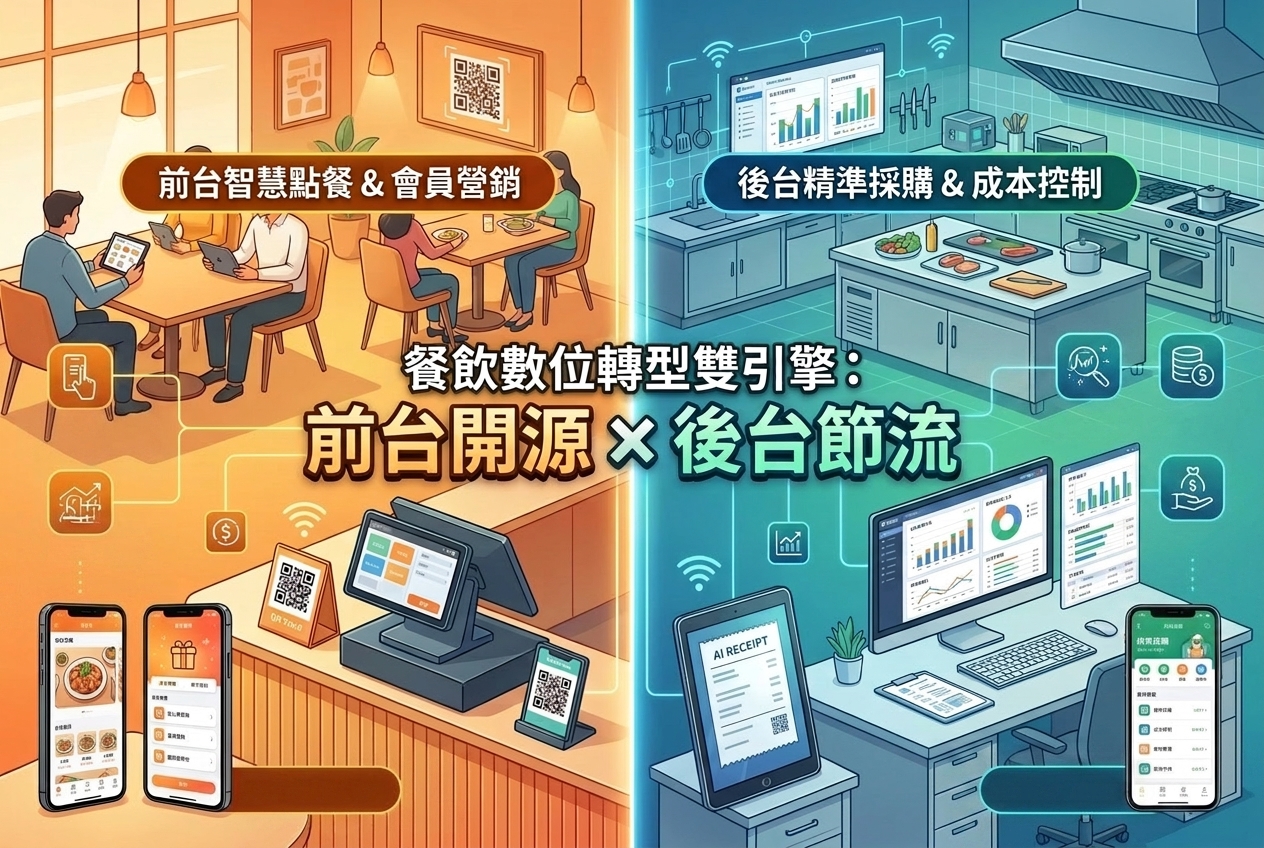
The most effective approach is to embed data collection into daily routines, not treat it as extra admin work. Staff place orders on mobile, verify deliveries on-site, snap photos of invoices to be automatically entered into the system, and log stocktakes or waste via an app. When data is standardized at the source, management can finally view a realistic operational performance report on the same day.
Next comes integration. The POS feeds sales, purchase invoices provide food cost, inventory systems provide stock levels and usage, and accounting handles accounts payable and expenses. When these data points connect, your daily estimated P&L shifts from an "educated guess" to a dashboard built on operational facts.
Using platforms like Costflows is less about paperless storage and more about leveraging AI extraction and verification to eliminate manual data entry. It ensures error-free data flows instantly into your cost, purchasing, inventory, and profit analysis. For operators, the value is clear: less time spent on calculations, and more time spent fixing issues on the same day.
How Daily P&Ls Change Your Decision-Making
The most obvious shift is speed. When you see an ingredient cost anomaly today, you can adjust tomorrow’s orders or renegotiate with your supplier immediately instead of chasing discrepancies at the end of the month.
Second, menu management becomes realistic. Many restaurants set prices and leave them static for months despite fluctuating food costs. When you monitor changes in item margins daily, you know when to adjust pricing, change portions, or swap out ingredient combinations. You don't have to eliminate low-margin items right away—some are great loss leaders—but you'll at least be making an active choice rather than bleeding profit blindly.
Third, cross-departmental collaboration improves. Managers focus on profit instead of just sales, head chefs track waste alongside dish quality, and buyers look at unit margins instead of just delivery speed. A daily estimated P&L aligns everyone toward a single goal: protecting margins with data.
Tailor the Report to Your Scale
A single-location cafe has different needs compared to a multi-unit chain. A small owner cares more about cash flow, daily revenue, and high-volume ingredient costs. A chain brand needs to compare performance across locations, audit central kitchen dispatches, and track cross-store stock usage variances.
Your reporting format must follow your business model. If you run central kitchens, cost allocation for transfers is critical. If delivery volumes are high, third-party commissions cannot be ignored. If you run a franchise system, standardized reporting rules are vital; otherwise, comparing location performance is impossible.
A workable daily estimated P&L isn't about having the most columns; it's about ensuring every number can be traced, explained, and converted into an actionable decision.
Focus on Timeliness Over Perfection
Many operators get stuck because they try to make their daily estimates match month-end financials down to the last penny. In F&B management, timeliness is far more valuable than absolute precision. As long as your data sources are stable, calculation logic remains consistent, and minor variances are adjusted over time, a daily estimate will vastly improve your management efficiency.
You don’t need to know if your final accounting score is 100 or 101 today. You need to know if your margins are healthy, which cost items are drifting, and which location needs immediate support. When a report can answer those questions daily, it becomes an indispensable operational tool.
Restaurant margins are rarely lost to a single bad decision—they are lost to dozens of unaddressed daily micro-deviations. When you manage with a daily estimated P&L, you aren’t just looking at data faster; you are building data discipline across your entire team.
Restaurant Daily Profit Management Q&A
Q1: Why do restaurants need a daily estimated P&L instead of waiting for month-end reports?
F&B costs fluctuate daily. By the time monthly financial reports are ready, margin losses are already finalized. A daily estimated P&L unifies sales, purchasing, and stock data on the same day, allowing operators to spot cost spikes and margin drops instantly and adjust pricing or ordering immediately.
Q2: How can we address concerns about "inaccurate data" when setting up a daily P&L?
A daily P&L is an operational management tool, not a tax filing document. Its primary value is trend visibility and speed, not absolute accountant-level precision. By using consistent cost allocation rules and capturing invoices daily, you get highly reliable trends to guide daily buying and menu decisions.
Q3: How do we get frontline staff to cooperate with daily P&L data collection?
The key is automating data collection to eliminate admin work. Using AI systems like Costflows OCR, staff simply snap photos of delivery notes to enter them instantly into the system. Digitizing stocktakes and waste logs on mobile apps keeps the process fast and frictionless for the team.
.png)

訂閱最新消息
不要錯過任何餐飲的資訊