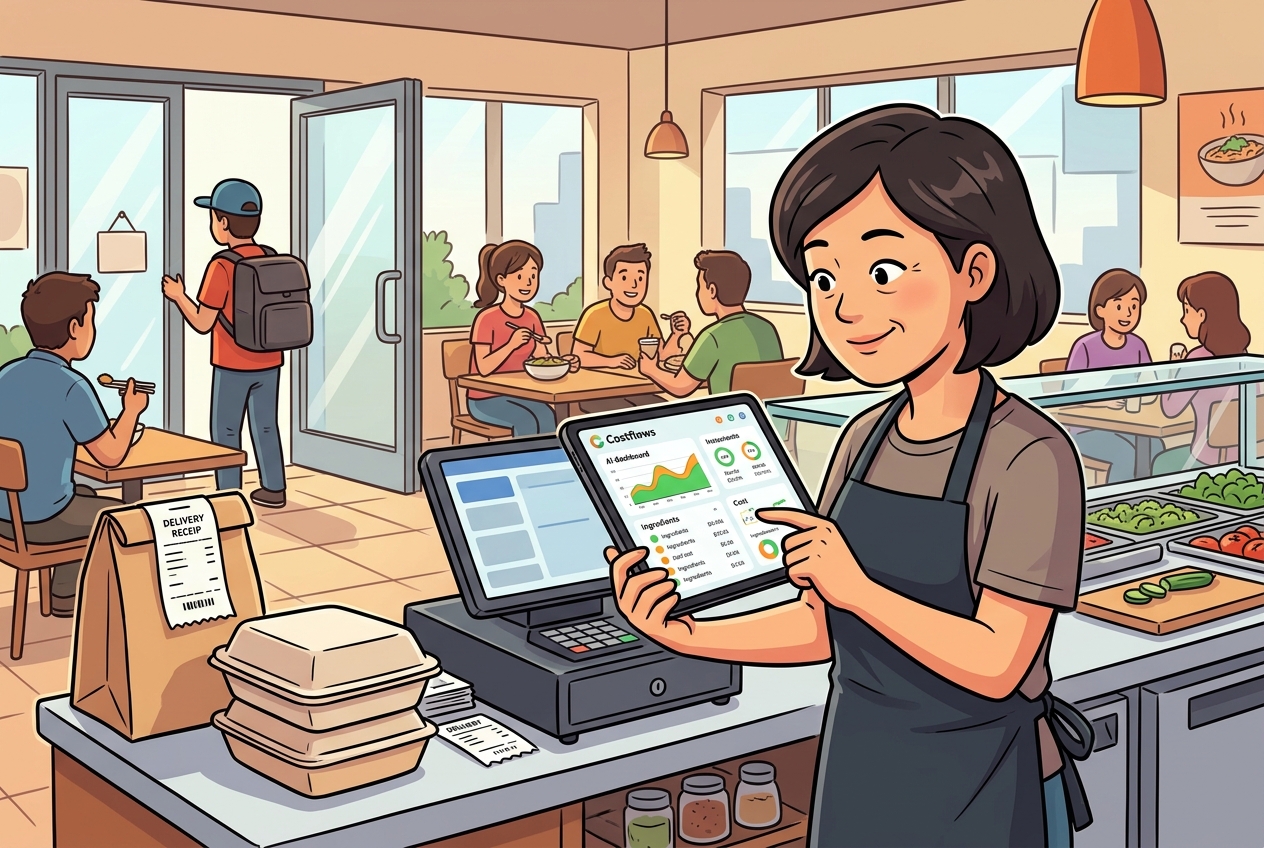
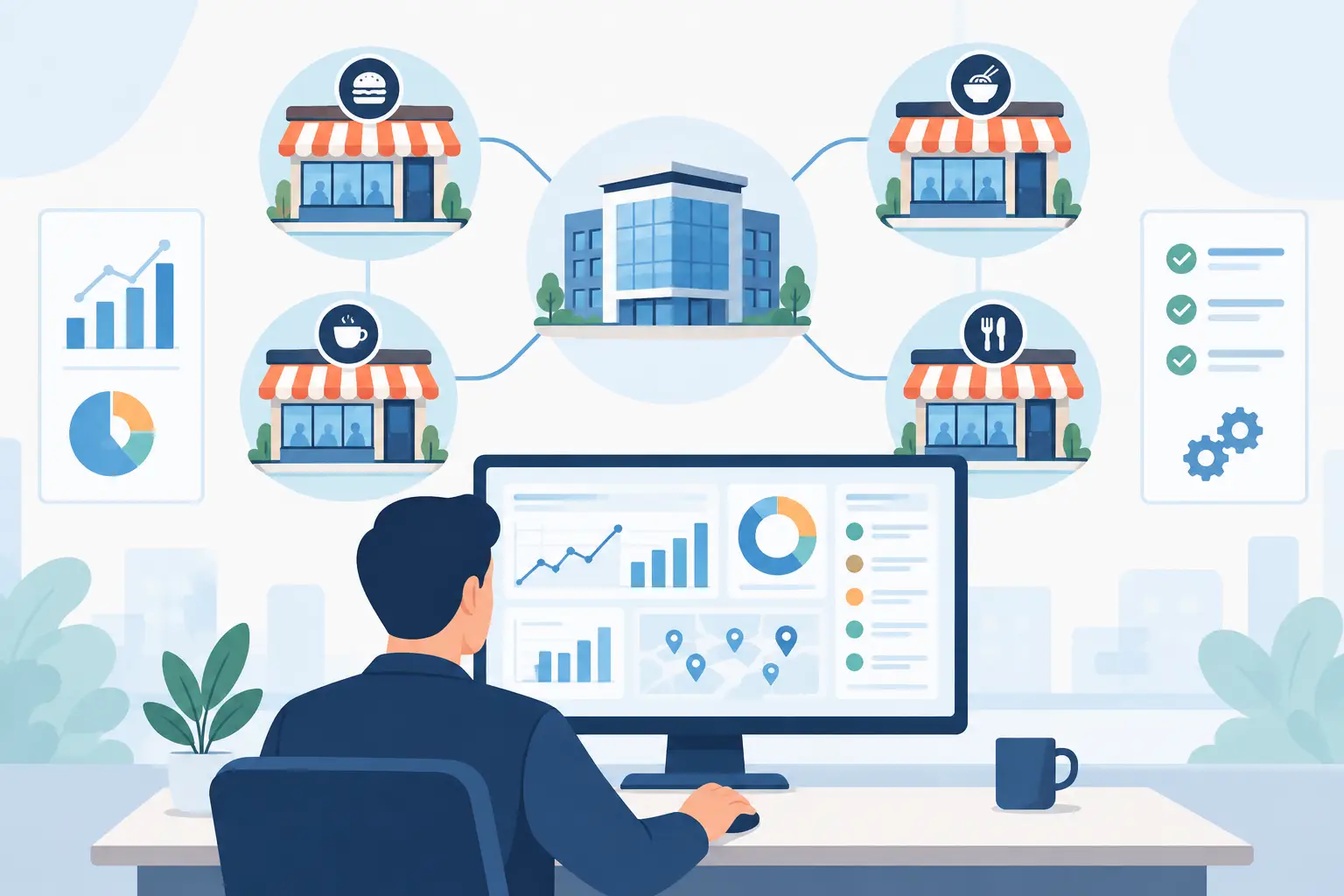
When you are expanding to multiple locations, but your purchase orders, transfer sheets, and daily inventory audits are still scattered across WhatsApp, paper notes, and messy Excel sheets, the real headache isn't just "where is the stock?" It is about who actually owns inventory accuracy, when costs get booked, and how management spots shortages or waste before it eats into your bottom line.
Many restaurant groups rush into a central kitchen setup thinking it is the ultimate way to scale. Instead, they hit supply bottlenecks, deal with stores placing emergency orders, and watch team members bypass the system to buy directly from local vendors. Others stick to store-level purchasing for flexibility, only to realize the same ingredient has five different prices, waste is untraceable, and the finance team is left wondering where the margins went at month-end. Before choosing a side, you need to map out your workflows, data, and accountability.
Central Kitchen vs. Direct Buying: More Than Just Delivery
A central kitchen (or commissary) handles bulk purchasing, receiving, prep work, and storage in one place, then ships semi-finished items, sauces, or ready-to-serve dishes to stores. The primary advantage here is volume pricing and consistency. If your brand relies on signature flavors, complex prep, or tight quality control, a central kitchen helps simplify on-site prep, reducing reliance on highly skilled chefs at every location.
On the flip side, direct store buying lets individual outlets order, receive, and manage their own stock based on local demand. It is fast and flexible—perfect for menus heavy on daily fresh catch, seasonal produce, or stores that are far apart. The catch? Every location essentially becomes its own warehouse. If receiving, inventory counts, or waste logs get sloppy at even one store, head office loses visibility into true costs.
The real difference comes down to the "control point." A central kitchen centralizes control, while store buying decentralizes it to the kitchen floor. One guarantees consistency; the other guarantees agility. There is no single answer here. It is about measuring your logistics costs, stockout risks, and staff execution.
Spotting the Hidden Costs
Don't make decisions purely based on vendor quotes. A central kitchen might offer lower unit costs, but you have to factor in rent, cold-chain gear, labor, prep yield losses, packaging, delivery vehicles, and cross-store transfers. If your volume isn't high enough to absorb these overheads, your commissary will look busy but actually lower your overall margins.
Direct store buying looks cheaper because there is no delivery or central prep setup. But the hidden costs are very real. Think about the hours managers spend placing orders, kitchen crews receiving deliveries from multiple suppliers, and high spot-buying prices when stores run short. Even worse, over-ordering often leads to expired stock sitting at the back of the walk-in, with month-end "spoilage" chalked up as a generic loss with no paper trail.
To compare both options fairly, management should track a few unified metrics: landed cost per kilo, yield loss from receiving to plate, emergency spot-buy costs, variance metrics, and admin hours spent on ordering and matching invoices.
Don't Ignore Recipes and Unit Conversions
When a central kitchen sends a bag of marinated meat or a tub of soup base to a store, the unit used on the line rarely matches the purchasing unit. If the commissary buys in bulk (kg), packs by the bag (bag), and the store plates by the portion (portion), any gap in tracking conversion rates and yield loss will distort your actual recipe costs.
Similarly, with direct buying, different suppliers might invoice by the box, catty, bag, or piece. Without standardized item profiles and unit conversions, comparing prices across locations becomes an administrative nightmare. Setting up a master ingredient database is non-negotiable for both setups.
When is a Central Kitchen the Right Move?
If you have three or more locations and your menu features shared sauces, stocks, doughs, or pre-cut ingredients, a central kitchen is worth looking into. These items heavily impact taste consistency. Centralizing them cuts down on kitchen equipment costs at new sites and makes expanding much easier.
It is also highly practical for franchise systems. When you link central shipments, store-level receiving, and actual sales, you get a clear look at "theoretical vs. actual usage." If a store's food costs spike, you can immediately check delivery receipts and inventory gaps instead of relying on guesswork.
Just remember: don't build a commissary too early. If you only have a couple of stores, long delivery routes, or low volume, centralizing prep will only drive up costs. Start by centralizing high-value, highly standardized items first, and let stores source fresh goods locally.
When Should You Stick to Store Buying?
If your menu focuses on fresh daily seafood, seasonal veggies, or local bakery items, store-level buying is often more practical. Store managers can adjust orders on the fly based on weather, local events, or bookings to avoid excess waste.
But letting stores buy directly doesn't mean giving them a blank check. Head office should set pre-approved vendors, strict item specs, price thresholds, and safety stock levels. Teams on the ground should use mobile tools to log receiving, inventory, and waste on the fly, so the finance team always has clean records.
Once your sales and stock data are connected, ordering stops being a guessing game. Sales data tells you what you should have used; physical inventory counts tell you what you actually have left. The gap in between is where you find your answer.
The Smartest Approach: A Hybrid Model
For most growing chains, the best setup is a hybrid model. Centralize bulk, high-value, or labor-intensive prep, but let individual outlets source fresh produce locally. Head office sets the specs and pricing, while stores manage ordering volumes within authorized limits.
The trick with hybrid setups is keeping the paper trail connected. You want to make sure store-to-store transfers, commissary shipments, and local vendor receipts are tracked under the same database, not lost in WhatsApp chats.
A solid workflow should give the commissary visibility over yields, stores access to real-time stock levels, and management a bird's-eye view of food costs and vendor pricing. Once your purchase invoices are automatically processed and structured, your team can stop chasing paperwork and start protecting your margins.
With Costflows, you can connect your invoices, inventory counts, transfers, recipes, and POS sales in one continuous loop. Whether you buy centrally or locally, you can track everything with the same rules, helping you catch price spikes and stock variances early.
FAQ
Q1: When should a restaurant switch from store-level buying to a central kitchen?
It makes sense to evaluate a central kitchen when you reach 3 or more locations and have recipes that require strict flavor consistency (like signature sauces or doughs). This helps maintain product quality across all outlets and reduces the need for heavy kitchen prep equipment and specialized prep staff at each new store.
Q2: How do you prevent inventory tracking issues in a hybrid buying model?
The key is digitizing your receiving, transfer, and waste processes. Using a unified platform like Costflows allows you to link purchase orders, central kitchen shipments, store transfers, and sales. This ensures that every movement of stock is accounted for, eliminating the guesswork and manual double-entry.
Q3: Why are actual food costs often higher than theoretical costs, and how do we fix it?
This usually happens due to unrecorded waste, price fluctuations from suppliers, or portion control issues. You can fix this by setting up standardized unit conversions and using automated tools to capture invoice details instantly. This lets you compare theoretical usage against physical stock levels to pinpoint exactly where the loss is happening.
.png)

訂閱最新消息
不要錯過任何餐飲的資訊