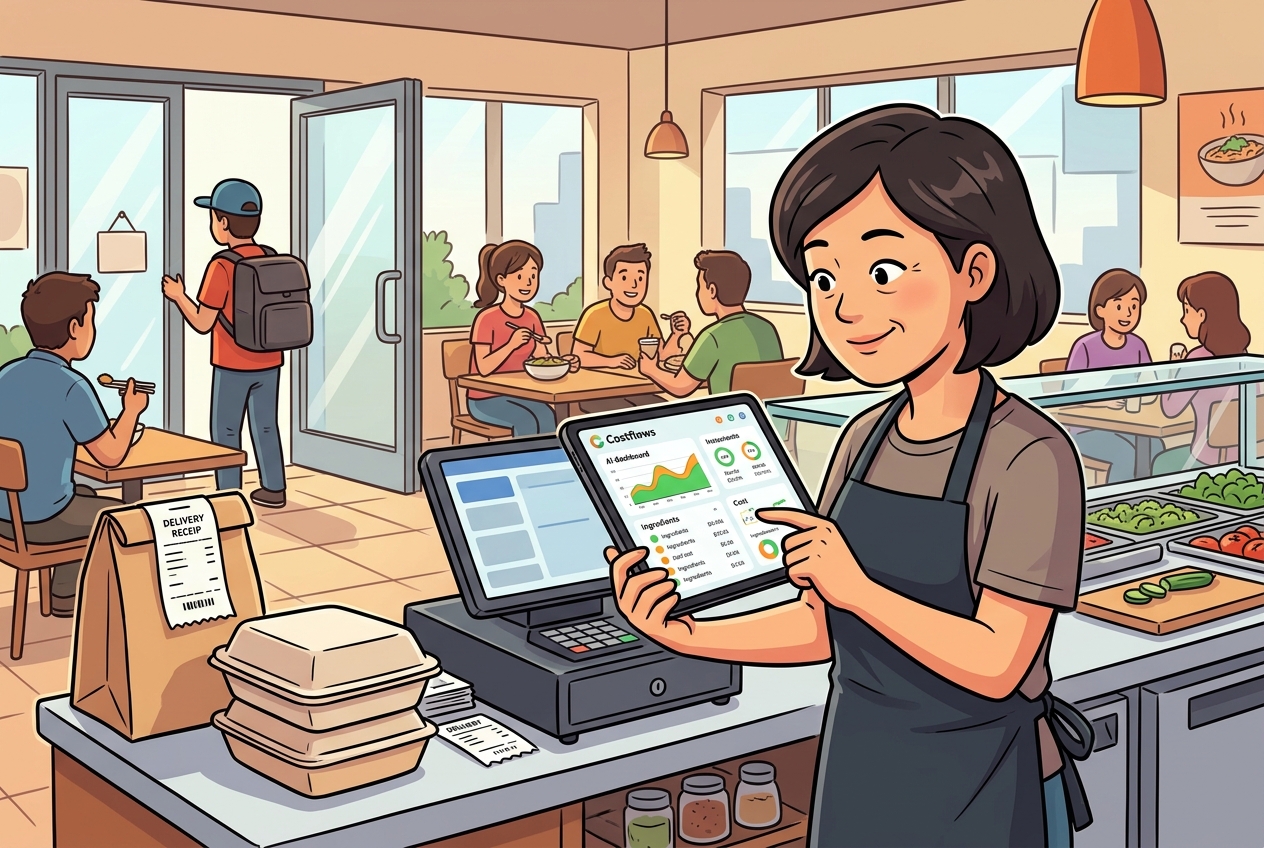
Many restaurants aren't struggling because they lack customers; they’re struggling because their profit is leaking away every single day. The chef says food costs are fine, purchasing says prices are stable, and the store manager sees decent revenue—yet, at the end of the month, the profit is missing. The fix isn't about micromanaging your staff; it’s about building a bulletproof data workflow that connects purchasing, inventory, recipes, waste, and sales into one single, transparent chain.
A common mistake in the industry is thinking that profit management is just about "beating down supplier prices." In reality, profit erosion rarely comes from one single source. It’s a series of small, uncontrolled leaks: a supplier bumps prices by 2%, a cook uses 5g more than the standard recipe, or waste goes unrecorded. These small margins add up and eventually eat your entire month's profit. The solution? Stop relying on monthly reports and start breaking your numbers down to the daily, item-level, and invoice-level.
Step 1: Transparency Starts with Procurement
If your purchasing data is scattered across paper receipts, WhatsApp groups, Excel sheets, and phone calls, your margins will never be stable. You’ll never be able to answer the big questions: How much are we overpaying? Where are the duplicate orders? Which store is paying more for the same item?
The first step is standardizing your procurement workflow. Every invoice, delivery note, and receipt should feed into one unified system. This isn't just about having a digital "filing cabinet"; it’s about giving management a real-time pulse on what you bought, how much it cost, and whether you're overpaying. Once your data is structured, the anomalies will practically flag themselves.
Next, you need to conduct regular price comparisons. Don't just switch suppliers on a gut feeling. Analyze price fluctuations by category and frequency to establish a "normal" price range for your core ingredients. When something consistently spikes above that range, you know exactly when to renegotiate, change specs, or find an alternative. Just remember: the lowest price isn't always the "best" price. Quality, reliability, and payment terms must be part of the equation.
Recipe Costs: Why You Shouldn't Guess
Most owners know which dishes "should" be profitable, but very few know exactly how profitable they are. The breakdown usually happens because recipe costs aren't precise. If you aren't accounting for every gram of sauce, every side dish, and every bit of waste, your menu costs look good on paper but fail in the bank account.
The goal is to build standardized recipes where the system automatically pulls in your real-time procurement prices. This gives you the actual theoretical cost and margin for every dish. This level of insight allows for smarter decision-making: Should you tweak the portion size on that popular-but-low-margin dish? Or should you change the menu placement of that high-margin item that isn't moving? Don't rely on guesswork—let the data tell you what to optimize.
Inventory & Waste: The Gap Between Theory and Reality
Many restaurants have great "theoretical" margins that disappear in the kitchen. If you aren't tracking waste, internal transfers, and physical inventory accurately, your actual costs will never align with your sales.
You don't need to count every single napkin daily, but you must track your high-value, high-volatility items—think seafood, premium meats, oils, and liquor. Record why something is missing. If you don't know the difference between "normal usage" and "waste," you'll never stop the drain. Systems like Costflows help bridge this gap by automatically comparing theoretical costs against your actual inventory counts, highlighting exactly where the discrepancies are.
Daily Reports Beat Monthly Analysis
Waiting until the end of the month to look at your P&L is too late. By then, the price spikes and waste issues are already "baked in" to your losses.
Instead, adopt a "daily profit pulse." Keep an eye on your key metrics every single day: revenue, food cost, major price shifts, and waste. When your team can see the numbers daily, they can fix problems in real-time. By using automated alerts for price anomalies or inventory spikes, you shift management from "damage control" to "proactive prevention."
Unify Your Data, Stop the Blame Game
The biggest enemy of profit is departmental silos. Purchasing says prices are fine, the kitchen says they’re following the recipe, and the finance team says the invoices don't match.
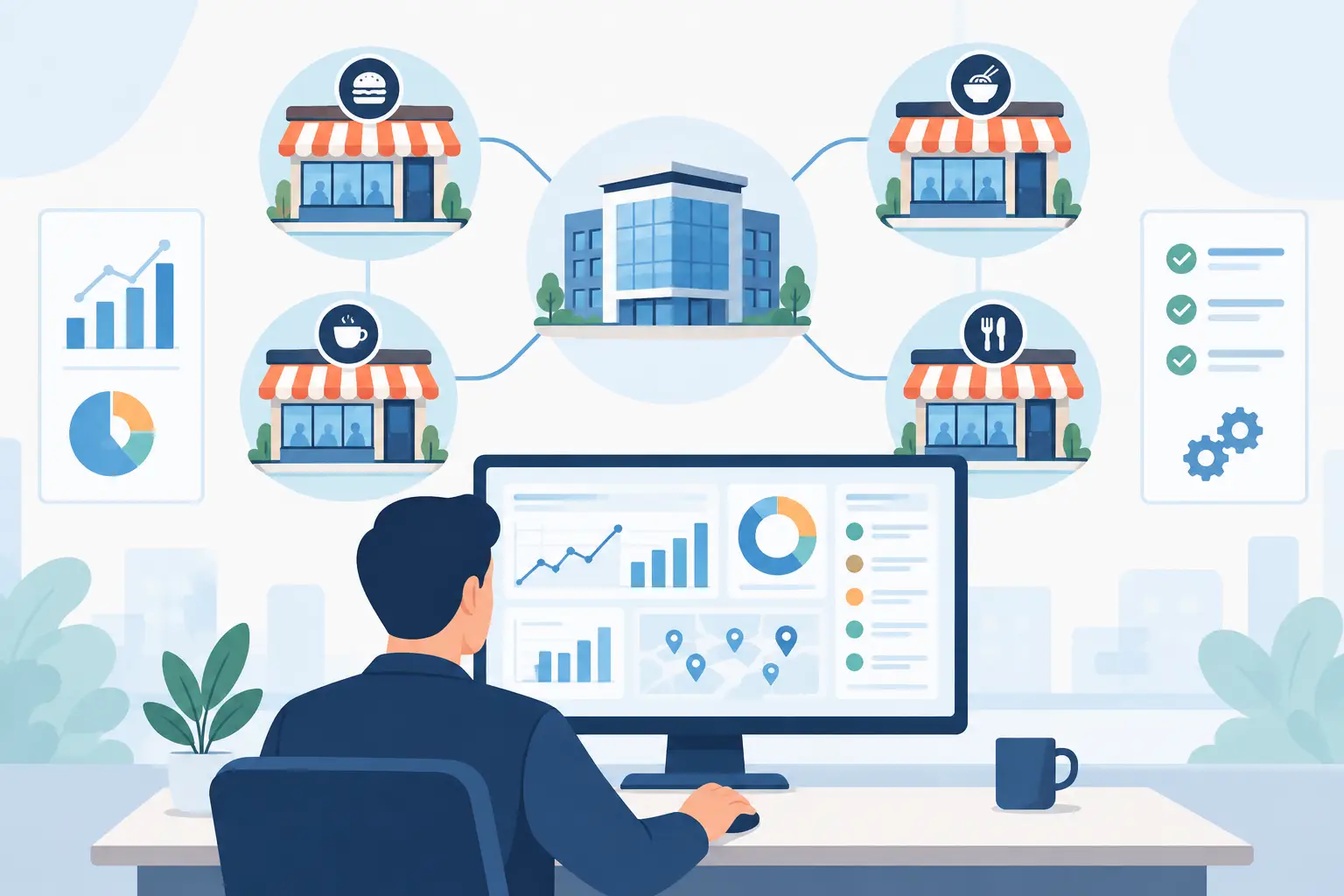
If your departments aren't looking at the same source of truth, you’ll never solve the problem. Standardizing your data is essentially building a "replicable profit model." For multi-unit operators or those with central kitchens, using an AI-powered platform like Costflows Intelligence—which centralizes documents, inventory, recipes, and vendor analytics—is far more effective than cobbling together various apps that don't speak to each other.
The Bottom Line: Start with Three Things
If you're still doing manual data entry and Excel-based reconciliation, don't try to reinvent the wheel overnight. Just start with three things:
- Digitize all purchasing and expense documents.
- Build standard recipes for your top 20 items to track real-time costs.
- Conduct regular, targeted inventory counts to compare theoretical vs. actual usage.
Success isn't built on one "perfect" monthly report. It’s built on saving a little bit every day, being a little more accurate every week, and leaving a little more profit on the table every month. Once you make the data visible, the path to profitability becomes clear.
.png)

訂閱最新消息
不要錯過任何餐飲的資訊