A box of frozen meat goes from $680 to $735. On paper, it's just a $55 increase. But if your restaurant orders 20 boxes a week, that's an extra $4,400 eating into your profits every single month. To make matters worse, these price hikes are usually buried deep inside paper delivery slips, WhatsApp chats, and outdated Excel files. By the time you notice it during month-end reconciliation, the damage is already done. This is where 'supplier negotiation data' becomes highly practical: it stops you from negotiating on gut feeling and gives you the exact historical facts to hold suppliers accountable.
Why Restaurants Usually Struggle to Find Leverage During Supplier Negotiations
Many buyers know they are being charged more, but they struggle to ask the right, hard questions. The issue isn't a lack of industry knowledge; it’s a lack of structured data. The manager might only see the latest invoice, the kitchen knows some items "got more expensive," and accounting sees the total spend weeks after the month closes. Because these departments are looking at different fragments of information, no one can confirm exactly when the price increase started, how steep it is, or if all locations are being charged the same inflated rate.
Suppliers will naturally point to rising fuel costs, crop shortages, exchange rate fluctuations, or changes in minimum order quantities (MOQ). While these reasons might be valid, you shouldn't just take their word for it. You need to see the numbers. Without access to item specs, unit conversion histories, purchasing volumes, and delivery logs, negotiation quickly boils down to a generic "Can you do any cheaper?" The result is usually a tiny, short-term discount—or no response at all.
To make data work for you, procurement, kitchen, and finance must look at the exact same facts: what was bought, from whom, the exact price per standardized unit, total quantities ordered, when prices changed, and how these changes impacted menu margins.
Supplier Negotiation Data in Action: Turning Receipts into Bargaining Chips
Let’s look at a real-world scenario. Imagine a three-unit restaurant brand buying boneless chicken thighs from Supplier A. Historically, they paid $420 for a 5kg box. Over the last three months, invoices show the price crept up to $438, and then jumped to $465. The restaurant buys an average of 180 boxes per month.
If you only look at the last invoice, a buyer might just ask, "Why is this $27 more expensive per box?" But when you look at the three-month trend, the cumulative increase is actually $45 per box—a 10.7% hike. At 180 boxes a month, the restaurant is paying an extra $8,100 monthly, or $24,300 a quarter. If their signature chicken rice dish uses 180g of chicken, the raw ingredient cost per plate has quietly jumped from $15.12 to $16.74, before factoring in sauce, sides, or prep waste.
At this point, negotiating isn't just about begging to "go back to the old price." The buyer can present hard facts: "We maintain steady volume across three branches, and we've paid on time for twelve months. This 10.7% increase has pushed our food cost percentage above target. If you can lock in a quarterly rate or offer a volume rebate, we are willing to centralize more of our purchasing with you." This turns a stressful argument into a professional business negotiation based on volume, partnership history, and margin targets.
At the same time, management can request a quote from Supplier B for the exact same specifications. The key is "exact specs"—don't just look at the item name. Check the origin, net weight, trim level, fresh vs. frozen status, delivery schedules, payment terms, and MOQs. If Supplier B quotes $450 a box, it looks $15 cheaper than Supplier A. But if their box only weighs 4.5kg, the actual cost per kilogram is actually higher. All quotes must be converted into a standardized unit—like per kg, per liter, or per 100 units—to make a fair comparison.
Four Critical Data Points to Gather Before You Negotiate
First is price history. You must be able to track unit prices, dates, suppliers, and specs for every order. Otherwise, you can't tell if a price spike is a temporary market fluctuation or a permanent supplier hike. Second is volume and concentration. Knowing exactly how much you buy monthly and which locations place the orders tells you how much purchasing power you can put on the table.
Third is quality and fulfillment performance. Low price doesn't equal low cost. If a supplier frequently delivers short, sends the wrong items, or provides inconsistent quality, your kitchen has to spend time making last-minute adjustments or discarding waste. Those hidden operational costs quickly wipe out any savings on paper. Fourth is menu impact. Not every price increase warrants a tough negotiation; it depends on how much the ingredient impacts your overall menu costs, sales volume, and existing margins.
For example, a 15% price spike on a spice you only use 10 boxes a month for isn't worth the labor of sourcing a new vendor. But a 3% price increase on a meat or seafood item used in multiple bestsellers can cost you thousands. Your negotiation priorities should be ranked by the total annual financial impact, not just the raw percentage increase.
Linking Quotes, Deliveries, and Waste into One Cost Chain
One of the easiest things for restaurants to miss is the gap between the quoted price and what is actually delivered. A supplier promises $80 per kg, but the delivery ticket charges per box. If the box was supposed to weigh 10kg but actually contains only 9.2kg, and your receiving team doesn't catch it, your recorded unit cost is wrong. Future negotiations will be built on flawed data.
That's why receiving staff must record weight, counts, quality issues, and returns immediately at the kitchen door. Similarly, waste and inventory must be tracked together. A supplier might offer vegetables at an 8% discount, but if the yield is poor and the waste is high, the actual "usable yield cost" is higher. For high-waste items, you must compare usable unit costs, not just purchasing price.
Once procurement data is connected to POS sales and recipe specs, management can analyze theoretical vs. actual costs. If prices have stayed stable but your actual costs are consistently higher than theoretical calculations, the issue isn’t your supplier—it's over-ordering, inconsistent portioning, unrecorded waste, or stock leaks. Knowing the difference keeps you from bringing internal operational issues to the supplier's negotiation table.
A Practical Supplier Negotiation Workflow
Before every meeting, procurement managers should pull 3 to 12 months of standardized unit costs and purchase volumes, highlighting any abnormal increases. Next, check with the kitchen to see if alternative products meet quality standards, and have finance calculate the impact on food cost percentages and monthly margins. Once there is internal consensus, you're ready to meet the supplier.
During negotiation, present clear, objective data: current vs. historical pricing, monthly volumes, committed future orders, and reasonable alternative quotes. Then propose structured solutions: fixed quarterly pricing, tiered volume rebates, specific item discounts, consolidated branch ordering, or longer payment terms in exchange for lower unit costs. If a supplier is genuinely facing market pressure, agree on a clear price-review schedule so you aren't hit with surprise price hikes.
Once a deal is struck, don't forget the final step: verification. The new prices, effective dates, and rebate terms must be updated in your procurement system so future delivery invoices are automatically matched. If you agreed on $440 per box but the invoice rolls in at $465, your team should spot the discrepancy before paying, rather than trying to chase a refund weeks later.
Turn Spreadsheet Data into Leverage
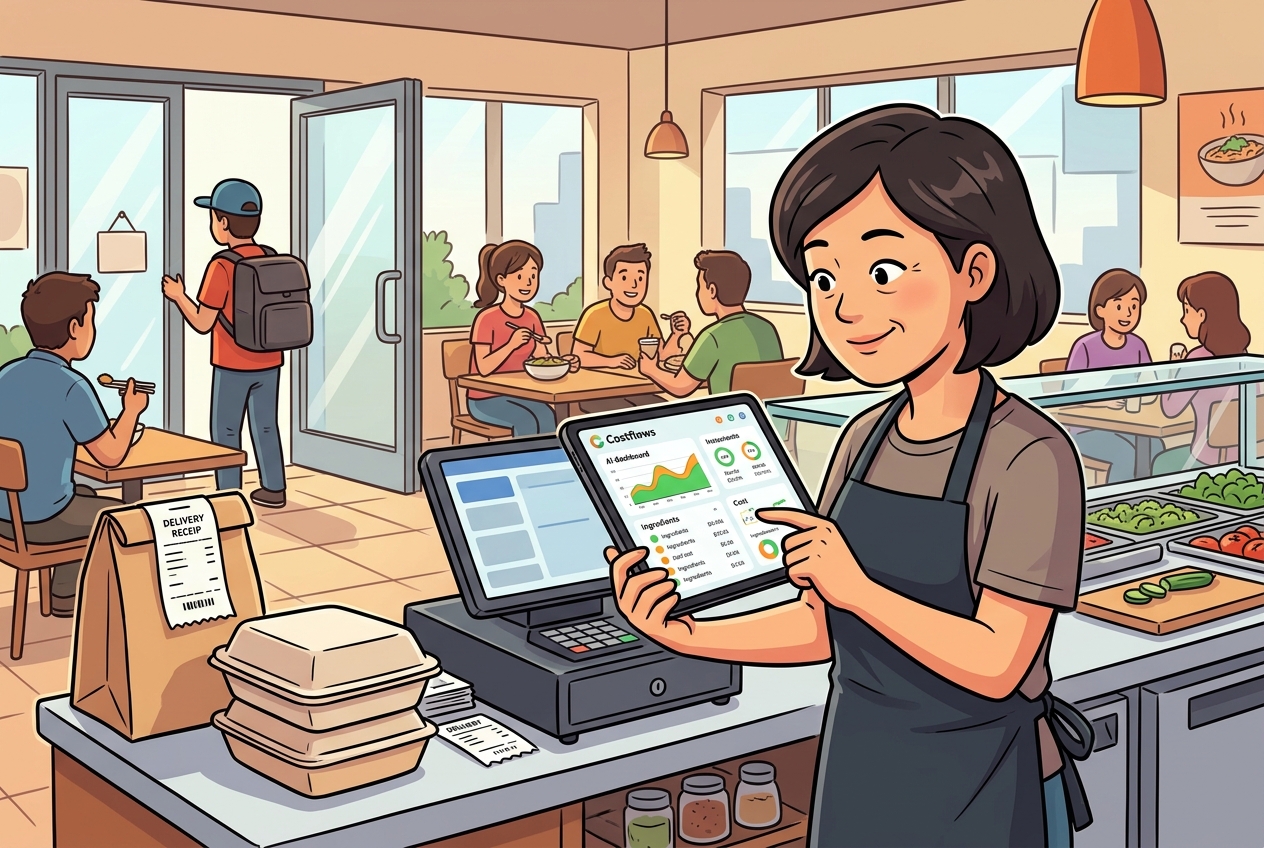
Managing paper invoices, handwritten receiving logs, and WhatsApp messages isn’t impossible, but manual methods are simply too slow to keep up with fast-moving supplier prices. Costflows uses advanced AI to extract data from supplier invoices with human verification, turning messy paper receipts into structured purchasing history. It connects pricing trends, inventory, waste, and recipe costs in one single place.
The true value of this automation isn’t just saving hours of manual data entry; it’s building an auditable process. When a supplier raises a price, a branch orders too much, or a dish's margin drops, managers can see exactly why and act immediately.
The next time a supplier announces a price hike, you don't have to just accept it or ruin the relationship with a hostile argument. Bring your purchase volumes, price trends, quality records, and menu impact data to the table. Restaurants that continuously track and verify their data are the ones that turn supplier negotiations into a structured, margin-saving routine.
Frequently Asked Questions (Q&A)
Q1: What data points should a restaurant prepare before negotiating with suppliers?
A1: You should prepare four key data points:
- Price History: Track previous unit prices and dates to establish the rate of price increases.
- Total Volume: Quantify your buying power across all locations.
- Quality & Delivery Logs: Keep records of short-deliveries, late arrivals, and spoiled stock.
- Food Cost Impact: Calculate exactly how much the price increase affects your menu margins.
Q2: Why is comparing raw supplier quotes often misleading?
A2: Comparing quotes is often misleading because of inconsistent box weights, packaging sizes, and product yields. To compare quotes fairly, convert all prices to a standardized unit (such as cost per kilogram) and carefully evaluate origin, trim levels, payment terms, and minimum order quantities (MOQs).
Q3: How does Costflows prevent restaurants from being overcharged by suppliers?
A3: Costflows allows you to log negotiated supplier contract prices directly in the system. When new invoices are uploaded via mobile, our system automatically cross-checks the invoice unit price against the contract price, alerting your team to discrepancies so you can resolve them before making payments.
.png)

訂閱最新消息
不要錯過任何餐飲的資訊